Autonomous SIM Dispensing Robotic System
The Challenge
Telecom retailers process high volumes of SIM activations daily through repetitive manual handling — slow, error-prone, and impossible to scale without proportional staffing increases.
Our Solution
Autonomous robotic system that picks, activates, packages, and dispenses SIM cards without human intervention — integrating computer vision, precision robotics, and carrier activation APIs.
Results & Impact
Complete SIM handling cycle from storage to customer without human intervention
Computer vision system identifies and manipulates individual SIM cards regardless of orientation
System handles SIM cards from multiple carriers with different form factors and activation protocols
Designed for 24/7 unattended operation in retail and kiosk environments
The Operational Problem
SIM card activation is one of the most repetitive tasks in telecom retail. Staff pick a card from inventory, scan it, enter details into a carrier system, wait for activation, package it, and hand it to the customer. Each transaction follows the same steps. Multiply that across hundreds of daily activations per location, and the labor cost is substantial for what is fundamentally a mechanical process.
The manual approach creates errors — wrong SIM size, activation on the wrong plan, cards from the wrong carrier batch. It creates bottlenecks during peak hours. And it means a retail location's throughput is capped by staffing levels.
The client wanted to automate the entire SIM handling process for deployment in high-traffic retail locations and unattended kiosks.
Talk to Our Engineers
The people who built this are the people you'll talk to. No sales team in between.
Start a Conversation →The System Architecture
Big0 engineered an integrated robotic system that handles the complete SIM dispensing workflow.
The robotic arm is a 6-axis system selected for precision and reach. It picks individual SIM cards from organized storage trays, positions them for scanning and activation, and places completed cards into dispensing slots. The arm operates within a compact footprint designed for installation in retail counters or freestanding kiosk enclosures.
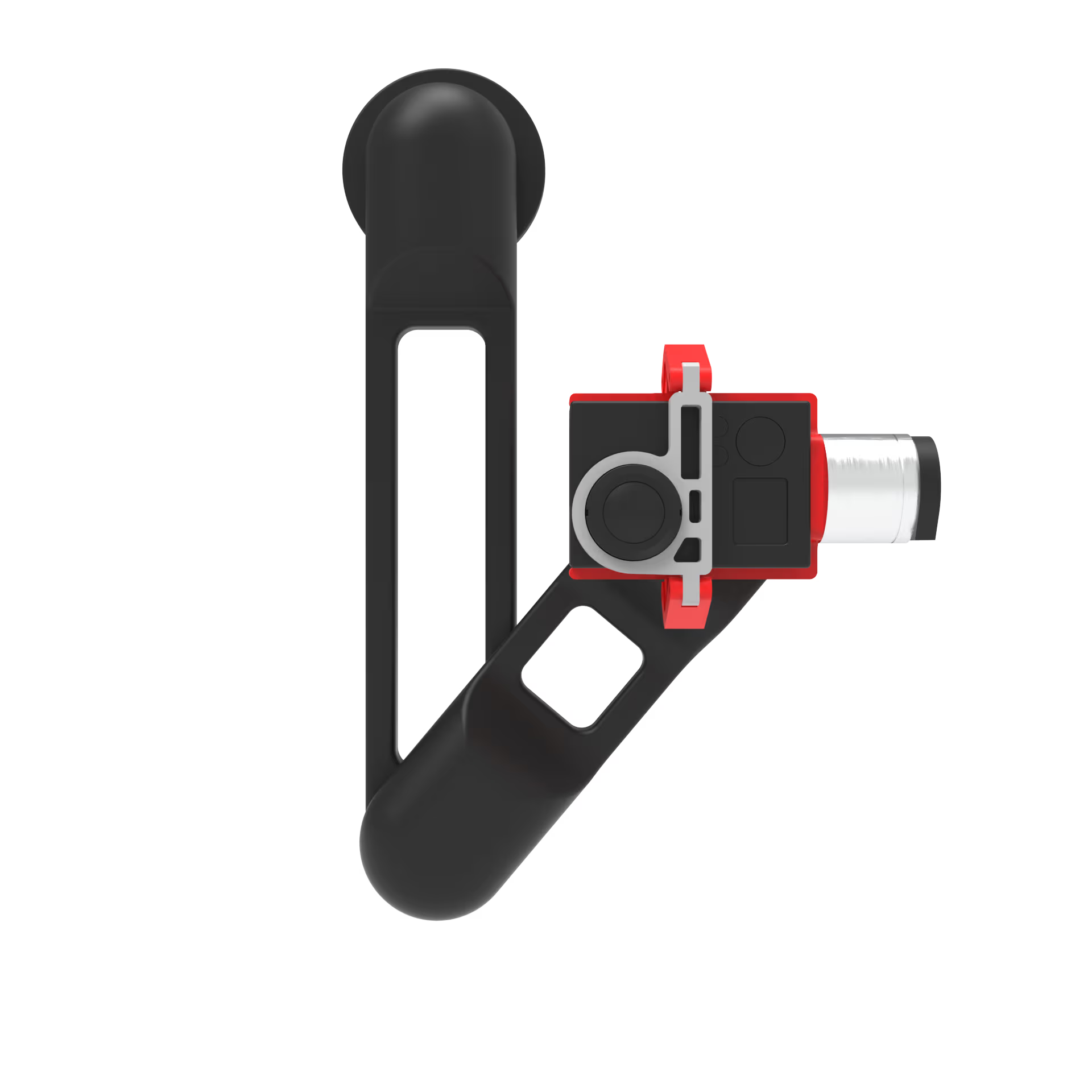 6-axis robotic arm with custom end effector for SIM card manipulation
Computer vision guides the entire process. Cameras mounted above the work area identify individual SIM cards, determine their orientation, and verify correct placement at each stage. The vision system handles variation — cards that aren't perfectly aligned in storage trays, different SIM form factors (standard, micro, nano), and cards from different carriers with different visual markings.
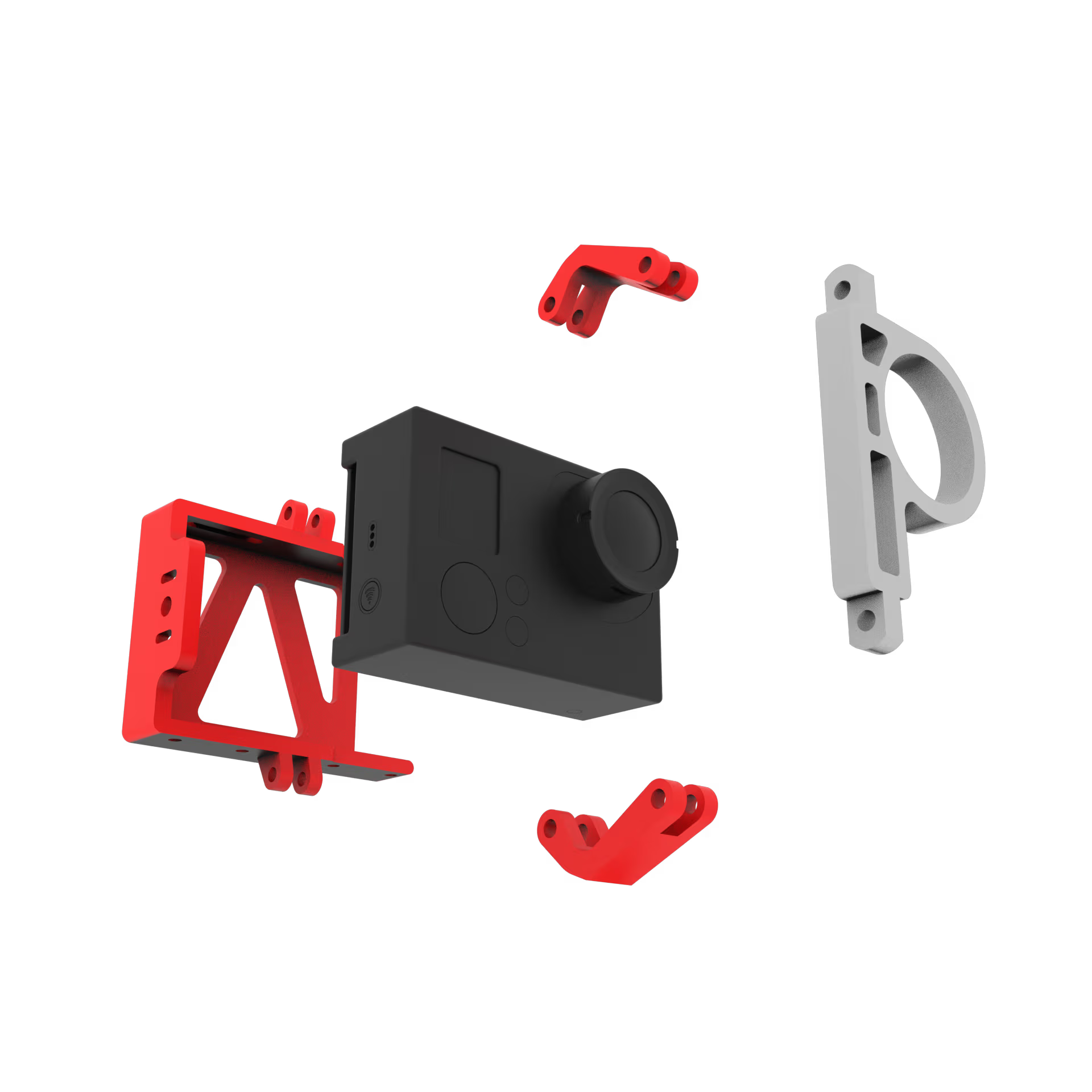 Computer vision identifying SIM card position and orientation
Carrier integration connects the physical handling to activation workflows. When the arm positions a card for scanning, the system reads the card's identifier, communicates with the carrier's activation API, confirms successful activation, and only then proceeds to dispensing. Failed activations trigger automatic retry or card replacement without human involvement.
The control system coordinates all components — arm positioning, vision processing, API calls, customer interface, and error handling — through an embedded controller running deterministic real-time software. The system maintains state across the entire transaction lifecycle so it can recover gracefully from interruptions.
Precision Engineering
SIM cards are small, thin, and slippery. Picking them reliably from a storage tray required a custom end effector — the tool mounted on the arm's wrist. Off-the-shelf grippers designed for larger objects couldn't achieve the precision needed. The custom design uses vacuum-assisted pickup with mechanical alignment features, achieving consistent handling across card types.
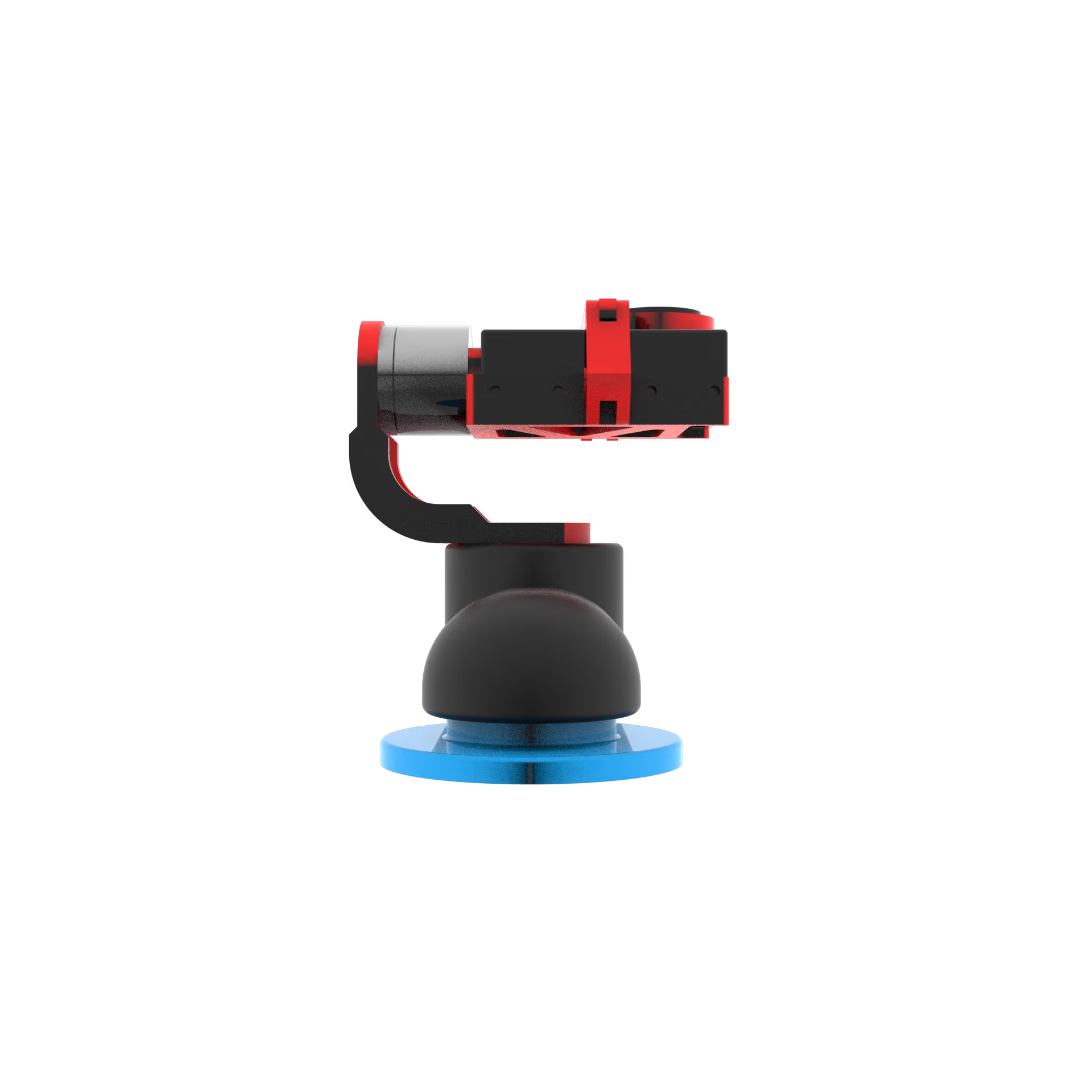 Custom vacuum-assisted end effector for reliable SIM card handling
Positioning accuracy matters throughout the process. The card must be placed precisely for the scanner to read it, and precisely in the output slot for the customer to retrieve it. The system was calibrated to maintain sub-millimeter repeatability across thousands of cycles.
The Results
The system performs SIM dispensing transactions without human involvement — from customer request through card selection, activation, and delivery. Throughput is consistent regardless of demand patterns because the system doesn't fatigue, take breaks, or make different errors under pressure.
Error rates dropped compared to manual handling. The vision system catches misidentified cards before activation, preventing wrong-carrier or wrong-plan errors that result in customer returns and rework.
The modular architecture supports different deployment configurations — integrated into existing retail counters, installed in freestanding kiosks, or deployed in unmanned locations. The same core system adapts to different physical environments through enclosure and interface changes rather than re-engineering the robotics.
The project demonstrates that precision automation is viable for retail operations that have traditionally been considered too variable for robots. The combination of computer vision for perception and carrier APIs for process integration bridges the gap between physical handling and digital workflows.
Talk to Our Engineers
The people who built this are the people you'll talk to. No sales team in between.
Start a Conversation →How We Built It
Talk to Our Engineers
Not salespeople. Engineers who've built production AI, shipped hardware, and published research.